


 Christina Medland
 Matt Seto
 Kaylie Folias
Incentive design is critical to support strategy, retain and motivate the best talent, and align compensation with performance and shareholder experience.
Three keys to strong incentive design are:

Choose the Right Performance Metrics
Choose the right metrics for your business by weighing:
• Strategy & Investor Goals: Near- and long-term business strategy, with a focus on investor-facing goals and targets.
• Value-Driving financials: The financial metrics that most directly drive value creation for shareholders.
• Operating Plan: Your critical annual operating plan metrics.
• Analyst & Investor Coverage: Metrics covered by analysts and investors in your sector.
• Peer Practice: Metrics used by your closest peers.
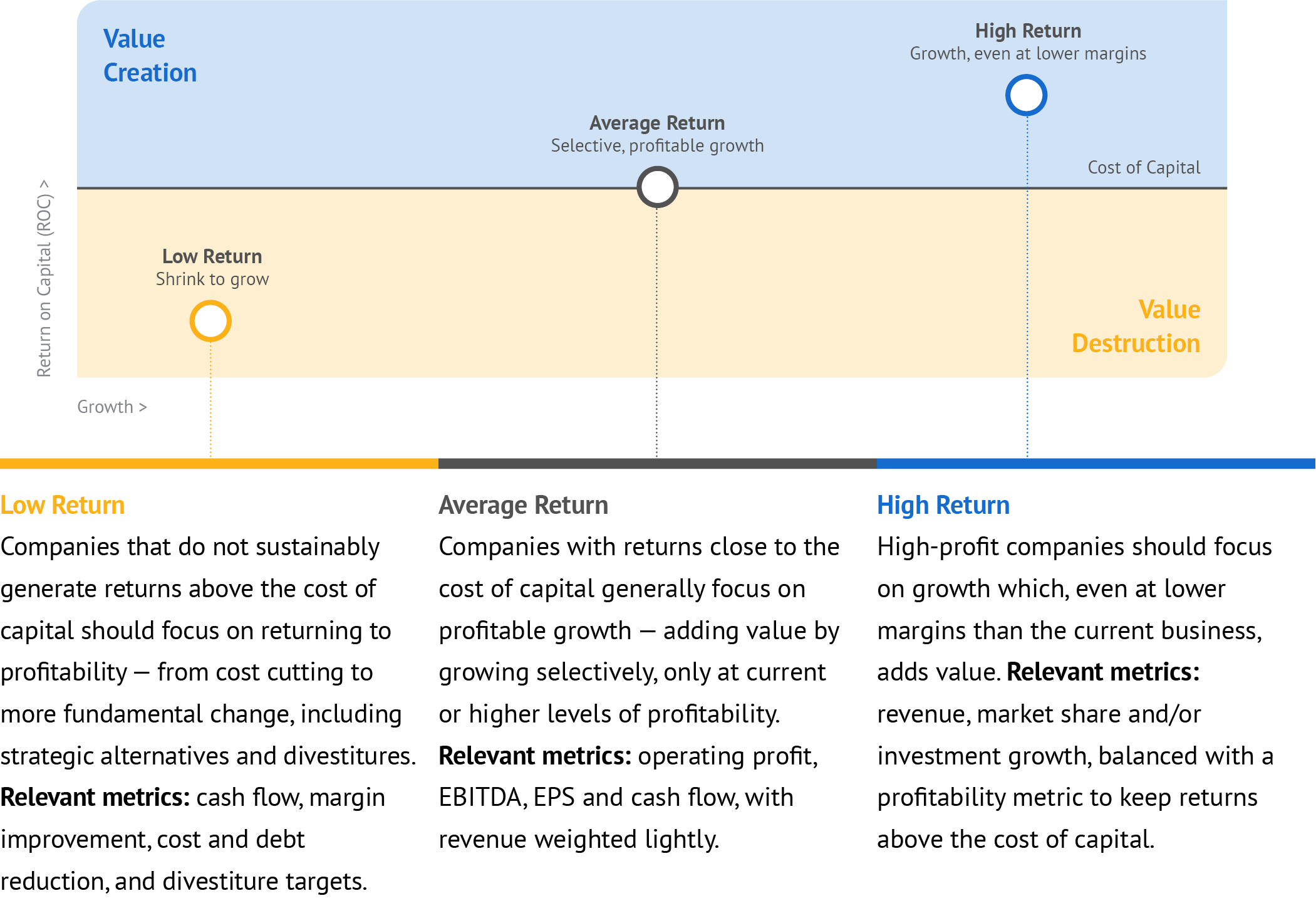
• Growth Stage: Where your company is in its growth journey
(pre-revenue, profitable growth, enhanced returns, “shrink to grow”)
Creating value is a function of three primary activities:
1. Generating profitability/returns in excess of the cost of capital;
2. Adding business that has returns above cost of capital;
3. Eliminating business which has returns persistently below cost of capital.
Metrics need to have the right blend and degree of emphasis on advancing profitability/efficiency vs. growth. This depends on where a
company is along the profitability continuum.
Set Performance Goals with Reasonable Stretch
Performance goals — whether for short- or long-term incentives — generally require both quantitative and qualitative assessments. Consider not just “target,” but the performance range around it (threshold and maximum). Five perspectives, in combination, drive reasonably stretched goals.
• Operating Plan / Budget: The most common starting point — management’s assessment of what it expects to achieve next fiscal year, reflecting a realistic view of both risks and opportunities.
• Performance of a Relevant Peer Group: How others in the same industry perform over time. Because this is backward-looking, it should be informed by where the company sits in its value-creation journey and realistic market and economic expectations.
• Strategic Aspirations: Consistency with the company’s strategic aspirations — either matching or meaningfully progressing toward desired long-run results.
• Investor Expectations: Consistency with what investors expect near- and long-term; at minimum, goals should not reward performance below market guidance.
• Sustainable Sharing: Stress-tested to ensure the sharing of profit and value creation between employees and shareholders is both reasonable and sustainable.
Design for Resilience
Well-designed incentive plans work appropriately in most scenarios — not just a narrow band of expected outcomes. Resilience can be built in six ways:
• Balance market-sensitive metrics: Include both market-sensitive and non-sensitive metrics — for example, a commodity-price-sensitive profit metric alongside a cost or production metric — and layer in sustainability measures such as safety, environmental impact, or customer and employee metrics.
• Vary metrics by time horizon: Use different metrics for annual and long-term incentives so each aligns to its own duration and goals. Long-term metrics measured over three years can be designed to “ride through” shorter volatile periods.
• Consider an asymmetrical payout curve: Where risks and opportunities aren’t symmetrical, widen the range below target when downside risk dominates, or above target when tailwinds are significant — avoiding a maximum payout for tailwind enhanced performance.
• Use relative TSR to moderate macro noise: Relative total shareholder return dampens the impact of commodity prices or macro conditions — and works best with a reasonable number of peers exposed to similar dynamics.
• Set adjustment principles in advance: Agree on materiality and symmetry principles for external events outside management’s control — FX rates, fuel prices, transactions — so targets can be set with more stretch from the outset.
• Balance long-term vehicles: Combine restricted share units (retention in down markets), performance share units (leverage with controllable moderation), and stock options (long-term share-price alignment).
Meiridan Perspective
There is rarely a perfect incentive design. The goal is performance metrics that make sense for the business, targets set with reasonable stretch and downside protection, and a design that delivers reasonable outcomes across a range of scenarios.