


 Kartik Balaram
While it has been a dry market over the past several years, 2025 has seen an increase in IPO activity and many believe that 2026 will be the year of the IPO. An IPO can be an exciting time for employees and investors signaling growth and liquidity. However, it must be met with diligence, especially as it relates to executive compensation, related governance, and Compensation Committee planning to ensure a smooth and well-informed transition.
In Meridian’s experience, establishing a roadmap, focused on key milestones can help promote thoughtful discussion and decision-making during these crucial months leading to a transaction:
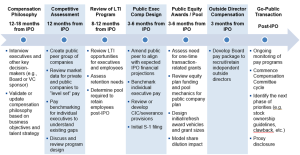
- Compensation Philosophy: A well-structured compensation philosophy can serve as the backdrop of how compensation decisions are made. It is important to get perspectives from key parties, including management and the Committee. Validating an approach and framework for pay decisions will make it easier to focus on attracting and retaining key talent during this transformational period.
- Competitive Assessment of Individual Executive Pay: It starts with developing a peer group of companies that will serve as the foundation for “market”. This peer group is typically set up based on industry, size, business / talent strategy and is supplemented with industry/size appropriate survey data.Reviewing the individual competitiveness of the executive compensation pay levels well in advance of the IPO (e.g. 12-18 months prior) can help companies understand where competitive gaps exist and the cost implications of transitioning to public company pay levels and process.
- Review of Pre-IPO LTI Opportunities: Long-term incentives (or equity compensation) is the cornerstone of public company pay strategy, and it is important to continue to incent and retain executives and employees well beyond an IPO.A review of current holdings for executives, “holding power” of equity, and expected vesting milestones can help get ahead of potential retention issues in the first 2-3 years of being public.
-
Public Company Executive Compensation Design: Developing a transition strategy to shift from private to public company pay levels is crucial. First step is refining the public peer group to account for expected IPO exit value, as needed.
The next step is conducting the benchmarking exercise that will provide insight into how each executive’s compensation elements are aligned with market and the company’s desired philosophy. From this workstream, management teams and Committees can determine the level of cost they are comfortable with and how pay will shift to public levels, over time (e.g. a 2–3-year transition strategy) the manage the expense going forward.
This is also an opportunity to review the not-for cause termination benefits in connection with, and without, a change-in-control of the company for executives. As the business strategy continues to evolve, aligning these benefits with market can provide peace of mind for the Committee and executives.
- Public Equity Awards & Pool: Once public, a company will have a new equity incentive plan it will administer to deliver public company equity awards. This equity incentive plan is approved by investors prior to going public and with this comes some flexibility on initial plan funding and other mechanics, such as an evergreen refresh provision. Additionally, this is also an opportunity to explore whether an employee stock purchase plan (“ESPP”) is a benefit the company wants to provide its employees.
- Outside Director Compensation: As a public company, establishing a Board of Director compensation program that pays independent Board members for their service is universal. Setting up a standard policy that provides annual cash fees for Board, Committee, and leadership service along with annual equity awards is recommended. This is reviewed each year for appropriateness and adjusted when there is material change in the company’s peer group or philosophy.
- Initial S-1 Filing: Additionally, this is the time when the preliminary S-1 filing is prepared, which will consistent of disclosures related to some of the key items covered above.
-
Go-Public Transaction: Post-IPO, it is important to develop an annual calendar of agenda items to review with the Committee throughout the year that focuses on the review and adjustment of compensation programs to ensure market competitiveness and alignment with the company’s ongoing business strategy.
Becoming familiar with the regulations under Sarbanes-Oxley & Dodd-Frank Acts and the proxy advisors (i.e. ISS and Glass Lewis) will also be important as companies will be subject to shareholder voting and specifically Say-on-Pay. Ongoing education on best practices around compensation governance and pay disclosures in proxy statements will be crucial.
Conclusion
Effective planning for an IPO is a critical aspect of ensuring a smooth transition from private to public status. By designing competitive and motivating compensation packages can successfully navigate this transformative phase. Well-planned compensation strategies not only attract and retain top talent but also align employee efforts with the company’s long-term goals, setting the stage for sustained success in the public markets.