


 Megan Sandquist
Why Deal Readiness Matters
With retail and restaurant M&A activity continuing, companies should revisit their change-in-control programs before a transaction is on the horizon. We’ve seen several examples of restaurant and retail companies in the past year acquired and taken private including, Denny’s, Potbelly, Skechers, and Walgreens. A well-designed Change-in-Control (CIC) program can help retain key executives, reduce uncertainty during negotiations, and avoid last-minute deal complications. An outdated or inconsistent program, by contrast, can create retention risk, unexpected transaction costs, and pressure for one-off negotiations at exactly the wrong time.
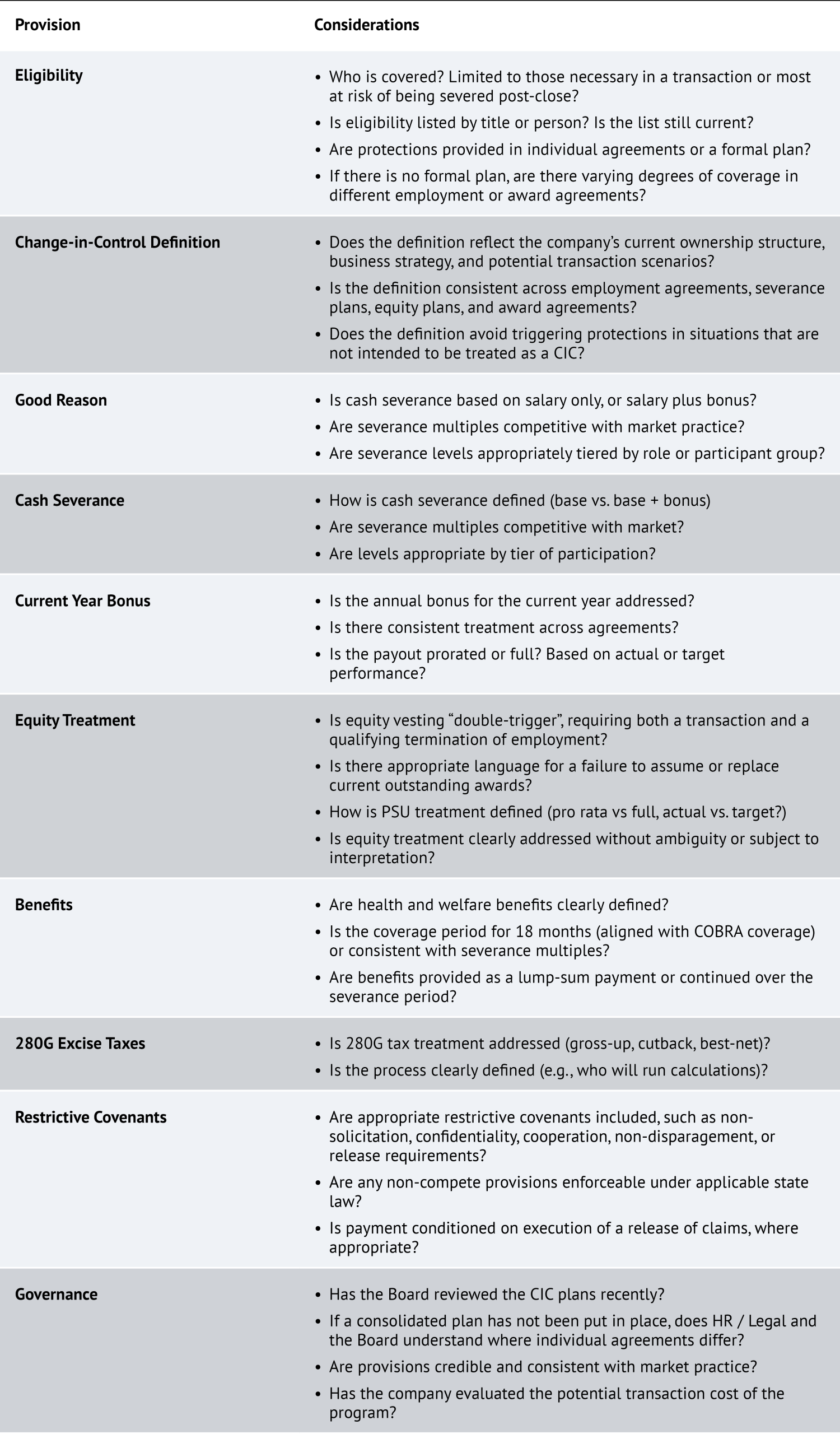
Being “deal-ready” means more than having a CIC plan on file. It means knowing who is covered, whether the terms are internally consistent, whether the protections are competitive with market practice, and whether the program will support — rather than complicate — a transaction. The following checklist highlights the provisions companies should review before a transaction arises. The goal is to determine whether those protections are current, consistent, competitive, and aligned with the company’s transaction strategy.
Questions to Ask Before the Next Transaction
Whether your company has a formal change-in-control plan or a collection of individual agreements, the following questions can help identify gaps before they become negotiating issues.
Preparing Before the Deal Begins
CIC misalignment can create avoidable friction in an M&A process, including executive retention concerns, uncertainty around equity treatment, unexpected costs, and pressure for last-minute negotiations. For example, if one executive’s agreement provides for full acceleration of equity while another’s provides only pro rata vesting, those differences may be difficult to explain — and harder to resolve — once a transaction is underway. A well-structured CIC program supports retention, promotes deal neutrality, and gives both the company and potential acquirers greater certainty regarding cost and treatment. For boards and management teams, the best time to review change-in-control protections is well before a transaction begins.
To learn more about current S&P 500 change-in-control market practices, explore Meridian’s Change-in-Control Severance Arrangements Survey.