

 David Bixby
Support reached 94% as low vote outcomes and ISS opposition continued to decline.
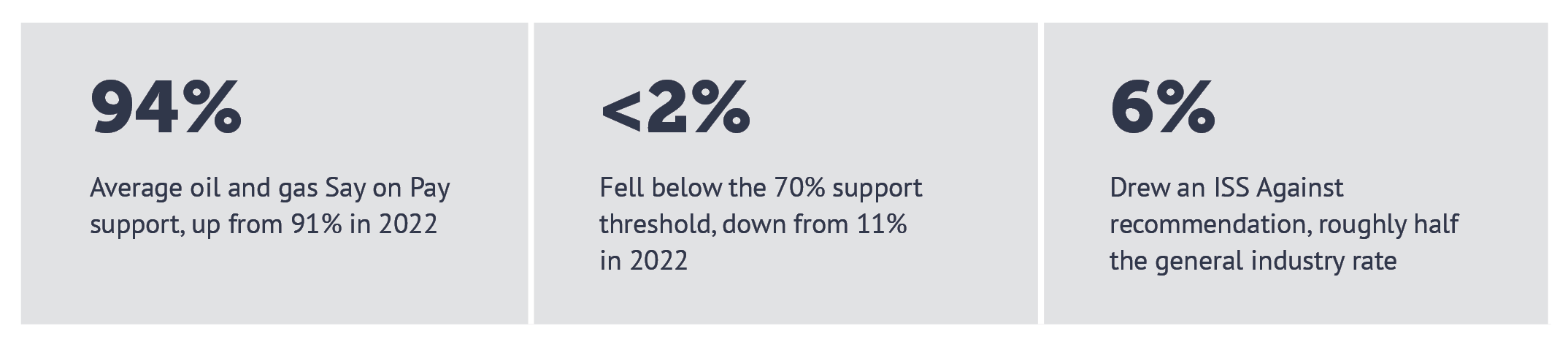
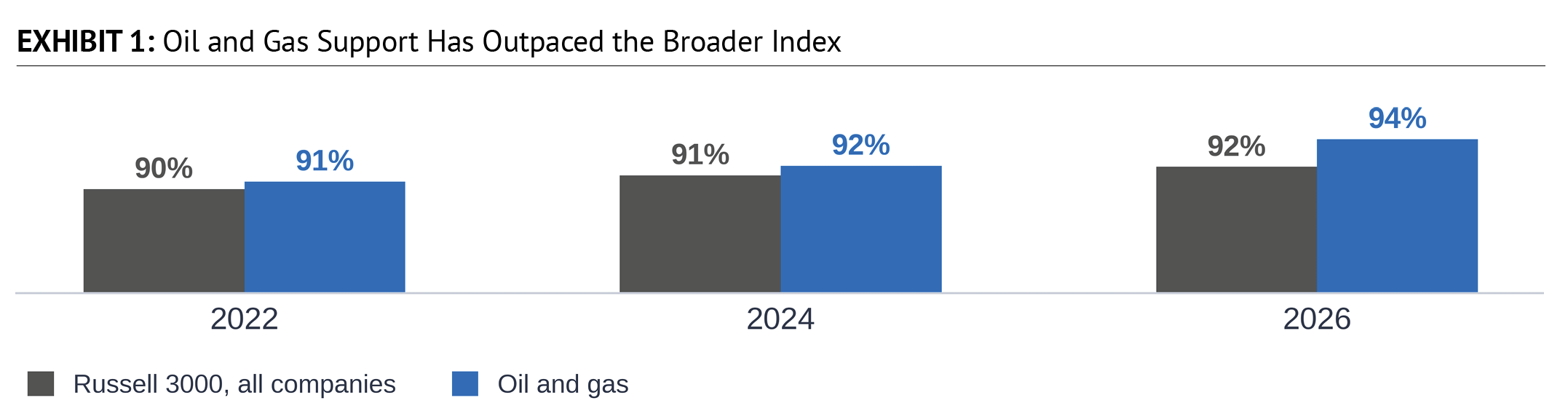
Based upon results published through July 24, 2026, average support for oil & gas company Say on Pay (SOP) proposals has exceeded 90% and has surpassed the average level of support within the Russell 3000. Over the past five years, the average level of support for industry pay programs has steadily increased from 91% in 2022 to 94% for 2026.
Fewer Companies with Low Vote Outcomes
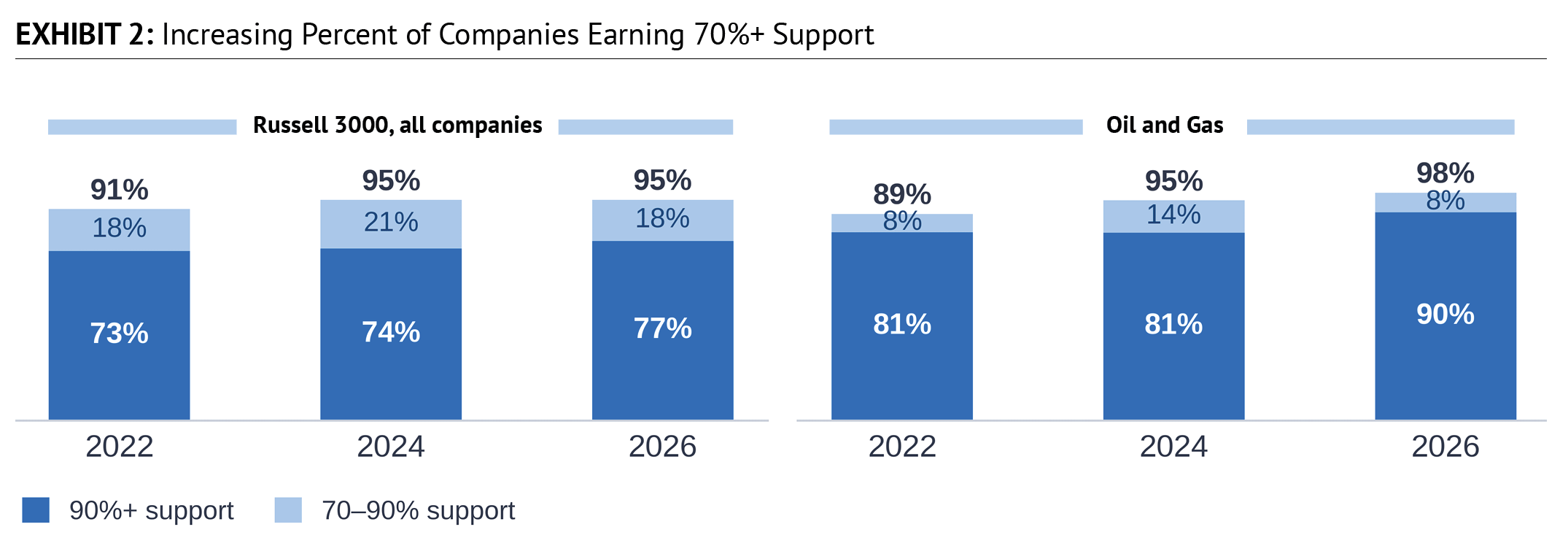
During the same period, the percent of Russell 3000 oil and gas companies earning less than 70% support declined significantly, from 11% in 2022 to less than 2% in 2026.
Achieving at least 70% is an important threshold. For companies that fall below this level, proxy advisor Institutional Shareholder Services (ISS) applies greater scrutiny to their Say on Pay review in the following year, looking for evidence of Compensation Committee responsiveness to shareholder concerns that drove the low vote outcome.
Frequency of ISS Opposition Fell Again in 2026
While shareholder support for oil and gas executive pay programs has been on the rise, the frequency of ISS opposition has declined. So far in 2026, roughly 6% of oil and gas companies in the Russell 3000 received an “Against” recommendation from ISS, compared with 14% in 2022 and 10% in 2024. Across the entire Russell 3000, the frequency of ISS opposition remained at roughly 11%.
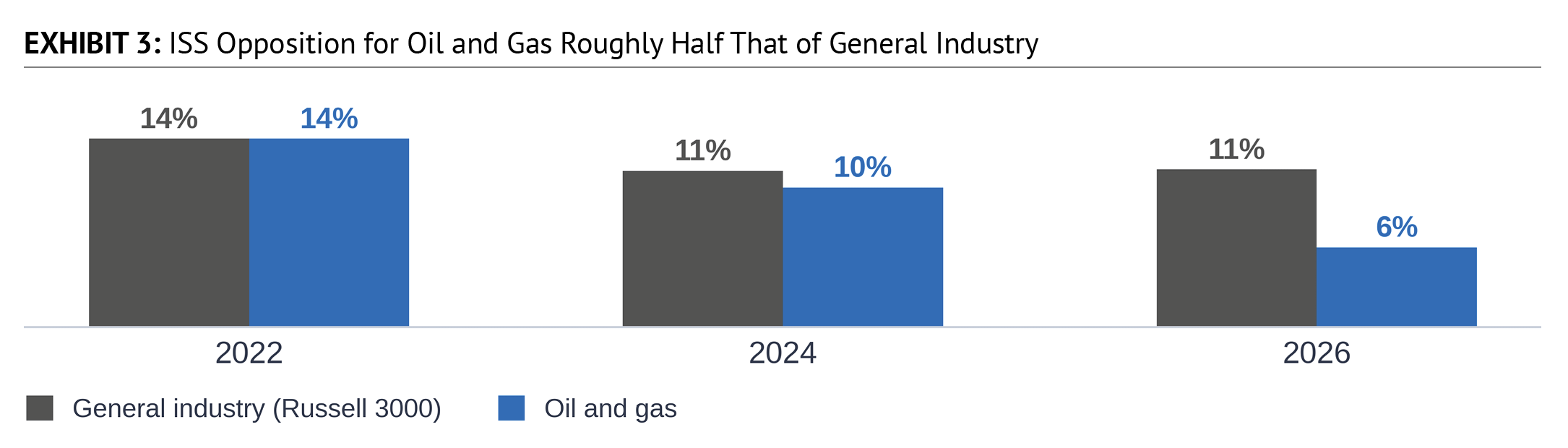
Six Russell 3000 oil and gas companies received ISS Against recommendations this year. Most triggered a pay-for-performance concern within the ISS quantitative model. Additional factors cited by ISS to justify their recommendation varied but included one or more of the following:
• Significant discretion in the annual incentive program
• Lack of rigor in incentive plan goals, including declining performance targets year-over-year
• Insufficient compensation disclosures
• Problematic severance terms in new agreements
• Excessive severance to a retiring executive
The trend suggests that many oil and gas companies are doing a better job anticipating potential voting concerns before proxy season, particularly around incentive rigor, discretion, disclosure and severance practices.

Proxy Advisor Impact Declining but Potentially Still Material
For Russell 3000 oil and gas companies, the average reduction in Say on Pay support following an ISS Against recommendation has fallen from more than 30 percentage points in 2022 to just under 20 percentage points this year. This outcome aligns with trends across the entire Russell 3000, where the average point reduction was 31.3 percentage points in 2022 and 21.5 percentage points in 2026.
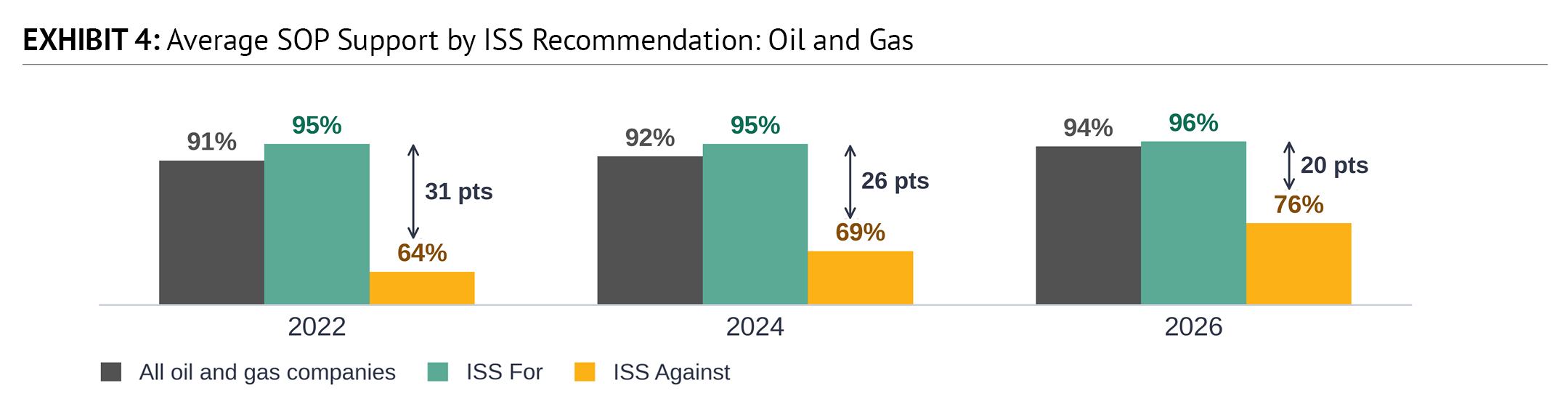
Several broader governance developments may be contributing to this shift:
• Increased scrutiny of proxy advisors: Proxy advisory firms have faced political and regulatory pressure to address apparent conflicts of interest and justify negative voting recommendations.
• Proliferation of proprietary governance guidelines: Large institutional investors increasingly rely on their own internal governance teams, data platforms and voting guidelines rather than voting automatically in line with proxy advisor recommendations.
• Direct shareholder engagement: Companies now engage more regularly and proactively in direct shareholder outreach on a variety of issues, including executive pay.
Ownership Structure Shapes the Outcome
However, declining average impact does not mean proxy advisor recommendations have become immaterial. Company-specific circumstances, particularly ownership structure and the concerns of a company’s shareholder base, remain important.
Within our small sample of six oil and gas companies receiving Against recommendations in 2026, four have concentrated ownership with a controlling shareholder. These controlled companies achieved average shareholder support of 89%. The two companies in our sample with more diffuse ownership had average Say on Pay support of less than 50%, with one failed vote.
The contrast suggests that the influence of a negative proxy advisor recommendation increasingly depends on whether the underlying concerns resonate with a company’s particular shareholder base.

Looking Ahead
Strong support for oil and gas executive pay programs in 2026 continues a positive multi-year trend. As industry companies navigate a fracturing compensation governance landscape and face an increasingly volatile commodity price environment, maintenance of this trend will depend upon continued shareholder engagement and responsiveness to anticipated concerns.